




Explore Plans

Bouncie to Webhooks integrations

When something happens with your vehicle in Bouncie, IFTTT can send that data anywhere via webhook. Hard braking, check engine lights, unusual driving times, long trips, pick what matters and route it to your own systems or apps.
Get started todayGet started today

Automate Bouncie and Webhooks from your AI assistant

Ask Copilot to create Bouncie applets that monitor your vehicle's health and driving patterns, right from your AI assistant, with IFTTT MCP.

Set up IFTTT MCP

Create your own Bouncie and Webhooks workflow

Create custom workflows effortlessly by selecting triggers, queries, and actions. With IFTTT, it's simple: “If this” trigger happens, “then that” action follows. Streamline tasks and save time with automated workflows that work for you.

31 triggers, queries, and actions

Bouncie was reconnected

Polling trigger
Polling Applets run after IFTTT reaches out to the trigger service and finds a new trigger event. These trigger checks occur every hour on Free, every 15 minutes on Starter, and every 5 minutes on Pro and Pro+.
This trigger fires when the Bouncie adapter is plugged back into the vehicle.

Geo-Circle was entered

Polling trigger
Polling Applets run after IFTTT reaches out to the trigger service and finds a new trigger event. These trigger checks occur every hour on Free, every 15 minutes on Starter, and every 5 minutes on Pro and Pro+.
This trigger fires when a vehicle enters one of its geo-circles.

Geo-Circle was exited

Polling trigger
Polling Applets run after IFTTT reaches out to the trigger service and finds a new trigger event. These trigger checks occur every hour on Free, every 15 minutes on Starter, and every 5 minutes on Pro and Pro+.
This trigger fires when a vehicle exits one of its geo-circles

Insurance expiration reminder

Polling trigger
Polling Applets run after IFTTT reaches out to the trigger service and finds a new trigger event. These trigger checks occur every hour on Free, every 15 minutes on Starter, and every 5 minutes on Pro and Pro+.
This trigger fires when a vehicle's insurance is expiring.

Receive a web request

Polling trigger
Polling Applets run after IFTTT reaches out to the trigger service and finds a new trigger event. These trigger checks occur every hour on Free, every 15 minutes on Starter, and every 5 minutes on Pro and Pro+.
This trigger fires every time the Webhooks service receives a web request to notify it of an event. To find your webhook URL and key, open Documentation on the Webhooks service page (mobile: Account > My services > Webhooks).

Receive a web request with a JSON payload

Polling trigger
Polling Applets run after IFTTT reaches out to the trigger service and finds a new trigger event. These trigger checks occur every hour on Free, every 15 minutes on Starter, and every 5 minutes on Pro and Pro+.
This trigger fires every time the Webhooks service receives a web request to notify it of an event. To find your webhook URL and key, open Documentation on the Webhooks service page (mobile: Account > My services > Webhooks).

Trip was completed

Polling trigger
Polling Applets run after IFTTT reaches out to the trigger service and finds a new trigger event. These trigger checks occur every hour on Free, every 15 minutes on Starter, and every 5 minutes on Pro and Pro+.
This trigger fires when a new trip is completed.

Vehicle care event

Polling trigger
Polling Applets run after IFTTT reaches out to the trigger service and finds a new trigger event. These trigger checks occur every hour on Free, every 15 minutes on Starter, and every 5 minutes on Pro and Pro+.
This trigger fires when a vehicle has a care event.

Vehicle drove a long distance

Polling trigger
Polling Applets run after IFTTT reaches out to the trigger service and finds a new trigger event. These trigger checks occur every hour on Free, every 15 minutes on Starter, and every 5 minutes on Pro and Pro+.
This trigger fires when a vehicle drives a long distance. Distance can be configured on drives alert page in the Bouncie App.

Vehicle drove at unusual time

Polling trigger
Polling Applets run after IFTTT reaches out to the trigger service and finds a new trigger event. These trigger checks occur every hour on Free, every 15 minutes on Starter, and every 5 minutes on Pro and Pro+.
This trigger fires when a vehicle drives outside the time range specified. Time range can be configured on drives alert page in the Bouncie App.

Vehicle had frequent hard brakes

Polling trigger
Polling Applets run after IFTTT reaches out to the trigger service and finds a new trigger event. These trigger checks occur every hour on Free, every 15 minutes on Starter, and every 5 minutes on Pro and Pro+.
This trigger fires when a vehicle brakes hard frequently

Vehicle had frequent rapid accelerations

Polling trigger
Polling Applets run after IFTTT reaches out to the trigger service and finds a new trigger event. These trigger checks occur every hour on Free, every 15 minutes on Starter, and every 5 minutes on Pro and Pro+.
This trigger fires when a vehicle has many rapid accelerations during at trip

History of Bouncie reconnections

Query
A query lets your Applet retrieve extra data that isn't included in the trigger, so that your automation can include more complete or useful information.
This query returns a list of when the Bouncie adapter was plugged back into the vehicle.

History of trips completed

Query
A query lets your Applet retrieve extra data that isn't included in the trigger, so that your automation can include more complete or useful information.
This query returns a list of when a new trip was completed.

History of vehicle brakes hard frequently

Query
A query lets your Applet retrieve extra data that isn't included in the trigger, so that your automation can include more complete or useful information.
This query returns a list of when a vehicle brakes hard frequently.

History of vehicle drove a long distance

Query
A query lets your Applet retrieve extra data that isn't included in the trigger, so that your automation can include more complete or useful information.
This query returns a list of when a vehicle drives a long distance.

History of Vehicle idles

Query
A query lets your Applet retrieve extra data that isn't included in the trigger, so that your automation can include more complete or useful information.
This query returns a list of when a vehicle was idle for a long time during a trip.

History of vehicle renewals

Query
A query lets your Applet retrieve extra data that isn't included in the trigger, so that your automation can include more complete or useful information.
This query returns a list of when a vehicle renewal occurred.

History of vehicle's check engine light ons

Query
A query lets your Applet retrieve extra data that isn't included in the trigger, so that your automation can include more complete or useful information.
This query returns a list of when the vehicles check engine come on.

History of web requests received

Query
A query lets your Applet retrieve extra data that isn't included in the trigger, so that your automation can include more complete or useful information.
This query returns a list of times the Webhooks service received a web request to notify it of an event. To find your webhook URL and key, open Documentation on the Webhooks service page (mobile: Account > My services > Webhooks).

History of when vehicle drove at unusual times

Query
A query lets your Applet retrieve extra data that isn't included in the trigger, so that your automation can include more complete or useful information.
This query returns a list of when a vehicle drove outside the time range specified. Time range can be configured on drives alert page in the Bouncie App.

Make a web request

Query
A query lets your Applet retrieve extra data that isn't included in the trigger, so that your automation can include more complete or useful information.
This query returns the status code from a request made to the provided URL. If the response body is in the correct format it will also return the body’s extracted values. Please see the documentation link on the Webhooks service page.

Make a web request with JSON response

Query
A query lets your Applet retrieve extra data that isn't included in the trigger, so that your automation can include more complete or useful information.
This query returns the JSON response body. You can use filter code to parse it. Please see the documentation link on the Webhooks service page.

Make a web request

Action
An action is the task your Applet carries out after the trigger occurs. It defines what happens as the result of your automation and completes the workflow.
This action will make a web request to a publicly accessible URL. NOTE: Requests may be rate limited.

Bouncie was reconnected

Polling trigger
Polling Applets run after IFTTT reaches out to the trigger service and finds a new trigger event. These trigger checks occur every hour on Free, every 15 minutes on Starter, and every 5 minutes on Pro and Pro+.
This trigger fires when the Bouncie adapter is plugged back into the vehicle.

Geo-Circle was entered

Polling trigger
Polling Applets run after IFTTT reaches out to the trigger service and finds a new trigger event. These trigger checks occur every hour on Free, every 15 minutes on Starter, and every 5 minutes on Pro and Pro+.
This trigger fires when a vehicle enters one of its geo-circles.

Geo-Circle was exited

Polling trigger
Polling Applets run after IFTTT reaches out to the trigger service and finds a new trigger event. These trigger checks occur every hour on Free, every 15 minutes on Starter, and every 5 minutes on Pro and Pro+.
This trigger fires when a vehicle exits one of its geo-circles

History of Bouncie reconnections

Query
A query lets your Applet retrieve extra data that isn't included in the trigger, so that your automation can include more complete or useful information.
This query returns a list of when the Bouncie adapter was plugged back into the vehicle.

History of trips completed

Query
A query lets your Applet retrieve extra data that isn't included in the trigger, so that your automation can include more complete or useful information.
This query returns a list of when a new trip was completed.

History of vehicle brakes hard frequently

Query
A query lets your Applet retrieve extra data that isn't included in the trigger, so that your automation can include more complete or useful information.
This query returns a list of when a vehicle brakes hard frequently.

History of vehicle drove a long distance

Query
A query lets your Applet retrieve extra data that isn't included in the trigger, so that your automation can include more complete or useful information.
This query returns a list of when a vehicle drives a long distance.

History of Vehicle idles

Query
A query lets your Applet retrieve extra data that isn't included in the trigger, so that your automation can include more complete or useful information.
This query returns a list of when a vehicle was idle for a long time during a trip.

History of vehicle renewals

Query
A query lets your Applet retrieve extra data that isn't included in the trigger, so that your automation can include more complete or useful information.
This query returns a list of when a vehicle renewal occurred.

History of vehicle's check engine light ons

Query
A query lets your Applet retrieve extra data that isn't included in the trigger, so that your automation can include more complete or useful information.
This query returns a list of when the vehicles check engine come on.

History of web requests received

Query
A query lets your Applet retrieve extra data that isn't included in the trigger, so that your automation can include more complete or useful information.
This query returns a list of times the Webhooks service received a web request to notify it of an event. To find your webhook URL and key, open Documentation on the Webhooks service page (mobile: Account > My services > Webhooks).

History of when vehicle drove at unusual times

Query
A query lets your Applet retrieve extra data that isn't included in the trigger, so that your automation can include more complete or useful information.
This query returns a list of when a vehicle drove outside the time range specified. Time range can be configured on drives alert page in the Bouncie App.

Build an automation in seconds!

You can add delays, queries, and more actions in the chat.

GET STARTED

How to connect to a Bouncie automation

Find an Applet using Bouncie and Webhooks

Find an automation to connect to, or create your own!

Connect IFTTT to your accounts

Securely connect the Applet services to your respective accounts.

Finalize and customize your Applet

Review trigger and action settings, and click connect. Simple as that!
Get started

Make more happen with your credits

  • Connect to more Applets

    More credits, more possibilities

    Get more credits per month to power more automation activity.
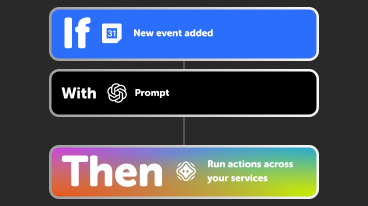
  • If a new calendar event is added, with an AI prompt, then an AI agent runs actions across your services

    Power more advanced automations

    Use credits to power your automations, including actions that require more processing.
  • Get access to faster speeds

    Access faster speeds and higher rate limits

    Get faster updates and more actions with increased rate limits and more frequent checks.

More on Bouncie and Webhooks

About Bouncie

Bouncie and IFTTT let you monitor your vehicle's health and driving patterns, triggering automations when something needs your attention.
Explore Bouncie

More integrations with Bouncie

About Webhooks

Webhooks and IFTTT let you connect any device or app that speaks HTTP to over 1000 services, creating automations between your custom projects and the apps you use.
Explore Webhooks

More integrations with Webhooks

IFTTT helps all your apps and devices work better together

Get started for free