






Add new Google Calendar events to Google Sheets
200+ ready-made Google Calendar and Google Sheets Applets
Turn one on, or build your own. Google Calendar can start an automation with "Any event ends", and IFTTT can then run "Add multiple rows to spreadsheet" on Google Sheets.-
 2.33k
-
-
Add new Google Calendar events to Google Sheets
1.02k
-
-
Add new Google Calendar events to Google Sheets
832
-
-
Log Google Calendar events to Google Sheets
466
-
-
-

-

-

- 1+
Automatically add new iOS Contacts to your Google services
14.6k
-
-
Save events from Google Calendar in Google Spreadsheet
234
-
-
Log Google Calendar invite responses to Google Sheets
180
-
-
Add new Google Calendar events to Google Sheets
166
-
-
Add new Google Calendar events to Google Sheets and get notified
306
-


USE CASE
Event documentation for future reference
Automatically transfer Google Calendar events to a spreadsheet for documentation. This helps business owners keep a historical record of events for future reference and trend analysis.
Get startedAutomate Google Calendar and Google Sheets from your AI assistant
Ask OpenClaw to create Google Calendar applets for you, right from your AI assistant, with IFTTT MCP.
Set up IFTTT MCP


Create your own Google Calendar and Google Sheets workflow
Create custom workflows effortlessly by selecting triggers, queries, and actions. With IFTTT, it's simple: “If this” trigger happens, “then that” action follows. Streamline tasks and save time with automated workflows that work for you.
41 triggers, queries, and actions
Any event ends
Polling trigger
Polling Applets run after IFTTT reaches out to the trigger service and finds a new trigger event. These trigger checks occur every hour on Free, every 15 minutes on Starter, and every 5 minutes on Pro and Pro+.
This Trigger fires within 15 minutes of the ending time of an event on your Google Calendar. Note: The time in the ingredient will be based on the timezone set in Google Calendar.
Any event starts
Polling trigger
Polling Applets run after IFTTT reaches out to the trigger service and finds a new trigger event. These trigger checks occur every hour on Free, every 15 minutes on Starter, and every 5 minutes on Pro and Pro+.
This Trigger fires a set number of minutes before the starting time of any event on your Google Calendar. Note: The time in the ingredient will be based on the timezone set in Google Calendar.
Cell updated in spreadsheet
Polling trigger
Polling Applets run after IFTTT reaches out to the trigger service and finds a new trigger event. These trigger checks occur every hour on Free, every 15 minutes on Starter, and every 5 minutes on Pro and Pro+.
This trigger fires when a particular cell is updated within the spreadsheet you specify.
Event from search ends
Polling trigger
Polling Applets run after IFTTT reaches out to the trigger service and finds a new trigger event. These trigger checks occur every hour on Free, every 15 minutes on Starter, and every 5 minutes on Pro and Pro+.
This Trigger fires within 15 minutes of the ending time of an event on your Google Calendar that contains a specific keyword or phrase. The search looks at the event’s Title, Description, and Location. Ingredient will be based on the zone set in Google.
Event from search starts
Polling trigger
Polling Applets run after IFTTT reaches out to the trigger service and finds a new trigger event. These trigger checks occur every hour on Free, every 15 minutes on Starter, and every 5 minutes on Pro and Pro+.
This Trigger fires a set number of minutes before the starting time of an event on your Calendar that contains a specific keyword or phrase in the event’s Title, Description, or Location. Ingredient will be based on the zone set in Google.
New event added
Polling trigger
Polling Applets run after IFTTT reaches out to the trigger service and finds a new trigger event. These trigger checks occur every hour on Free, every 15 minutes on Starter, and every 5 minutes on Pro and Pro+.
This Trigger fires every time a new event is added to your Google Calendar. Note: The time in the ingredient will be based on the timezone set in Google Calendar.
New event from search added
Polling trigger
Polling Applets run after IFTTT reaches out to the trigger service and finds a new trigger event. These trigger checks occur every hour on Free, every 15 minutes on Starter, and every 5 minutes on Pro and Pro+.
This Trigger fires every time a new event from search is added to your Google Calendar that contains a specific keyword or phrase. The search looks at the event’s Title, Description, and Location. Ingredient will be based on the timezone set in Google
New row added to spreadsheet
Polling trigger
Polling Applets run after IFTTT reaches out to the trigger service and finds a new trigger event. These trigger checks occur every hour on Free, every 15 minutes on Starter, and every 5 minutes on Pro and Pro+.
This trigger fires when a new row is added to a spreadsheet you specify.
New spreadsheet added to folder
Polling trigger
Polling Applets run after IFTTT reaches out to the trigger service and finds a new trigger event. These trigger checks occur every hour on Free, every 15 minutes on Starter, and every 5 minutes on Pro and Pro+.
This trigger fires when a new spreadsheet is added to a Google Drive folder you specify. Note: only works for spreadsheets created after the Applet turned on.
New worksheet in spreadsheet
Polling trigger
Polling Applets run after IFTTT reaches out to the trigger service and finds a new trigger event. These trigger checks occur every hour on Free, every 15 minutes on Starter, and every 5 minutes on Pro and Pro+.
This trigger fires when a new worksheet is added to a spreadsheet you specify.
You respond to an event invite
Polling trigger
Polling Applets run after IFTTT reaches out to the trigger service and finds a new trigger event. These trigger checks occur every hour on Free, every 15 minutes on Starter, and every 5 minutes on Pro and Pro+.
The trigger fires every time you respond to an event you're invited to. Note: The time in the ingredient will be based on the timezone set in Google Calendar.
Current value of a cell

Query
A query lets your Applet retrieve extra data that isn't included in the trigger, so that your automation can include more complete or useful information.
This query returns the current value of a single cell in your spreadsheet.
Current values of a row
Query
A query lets your Applet retrieve extra data that isn't included in the trigger, so that your automation can include more complete or useful information.
This query returns the current values in a given row. Values from columns A-Z are available as ingredients.
Find rows in spreadsheet
Query
A query lets your Applet retrieve extra data that isn't included in the trigger, so that your automation can include more complete or useful information.
This query returns the rows of a worksheet with a cell that contains or matches a value, with each row's number for "Update row in spreadsheet". Use it to look up rows instead of reading them one at a time.
Get rows in spreadsheet
Query
A query lets your Applet retrieve extra data that isn't included in the trigger, so that your automation can include more complete or useful information.
This query reads 50 rows of a worksheet, starting at the row you choose, and returns the ones with data. Use it to read a table, header row included, in one run instead of one row at a time. To read on, add 50 to the start row.
History of calendar event beginnings
Query
A query lets your Applet retrieve extra data that isn't included in the trigger, so that your automation can include more complete or useful information.
This query returns a list of event starting times on your Google Calendar.
History of calendar event endings
Query
A query lets your Applet retrieve extra data that isn't included in the trigger, so that your automation can include more complete or useful information.
This query returns a list of event ending times on your Google Calendar.
History of event from search starts
Query
A query lets your Applet retrieve extra data that isn't included in the trigger, so that your automation can include more complete or useful information.
This query returns a list of a set number of minutes before the starting time of an event on your Google Calendar that contains a specific keyword or phrase. The search looks at the event’s Title, Description, and Location.
History of events added
Query
A query lets your Applet retrieve extra data that isn't included in the trigger, so that your automation can include more complete or useful information.
This query returns a list of every time a new event is added to your Google Calendar.
History of events from search added
Query
A query lets your Applet retrieve extra data that isn't included in the trigger, so that your automation can include more complete or useful information.
This query returns a list of every time a new event from search is added to your Google Calendar that contains a specific keyword or phrase. The search looks at the event’s Title, Description, and Location.
History of events from search ended
Query
A query lets your Applet retrieve extra data that isn't included in the trigger, so that your automation can include more complete or useful information.
This query returns a list of ending time (within 15 minutes) of events on your Google Calendar that contains a specific keyword or phrase. The search looks at the event’s Title, Description, and Location.
History of rows added to spreadsheet
Query
A query lets your Applet retrieve extra data that isn't included in the trigger, so that your automation can include more complete or useful information.
This query returns a list of when a new row is added to a spreadsheet you specify.
History of spreadsheets added to folder
Query
A query lets your Applet retrieve extra data that isn't included in the trigger, so that your automation can include more complete or useful information.
This query returns a list of when a new spreadsheet is added to a Google Drive folder you specify. Note: only works for spreadsheets created after the Applet turned on.
Add multiple rows to spreadsheet
Action
An action is the task your Applet carries out after the trigger occurs. It defines what happens as the result of your automation and completes the workflow.
This action will add up to 5 rows to the bottom of the first worksheet of a spreadsheet you specify. Note: a new spreadsheet is created after 2000 rows.
Add row to spreadsheet
Action
An action is the task your Applet carries out after the trigger occurs. It defines what happens as the result of your automation and completes the workflow.
This action will add a single row to the bottom of the first worksheet of a spreadsheet you specify. Note: a new spreadsheet is created after 2000 rows.
Add row to top of spreadsheet
Action
An action is the task your Applet carries out after the trigger occurs. It defines what happens as the result of your automation and completes the workflow.
This action will insert a single row directly below the header row (row 1) of the first worksheet of a spreadsheet you specify, pushing existing data down.
Create a detailed event
Action
An action is the task your Applet carries out after the trigger occurs. It defines what happens as the result of your automation and completes the workflow.
This action will create a detailed event in your Google Calendar.
Create spreadsheet
Action
An action is the task your Applet carries out after the trigger occurs. It defines what happens as the result of your automation and completes the workflow.
This action will create a new blank spreadsheet in a Google Drive folder you specify. If a spreadsheet with the same name already exists, no new file is created.
Quick add event
Action
An action is the task your Applet carries out after the trigger occurs. It defines what happens as the result of your automation and completes the workflow.
This Action will add an event to your Google Calendar. Simply include a detailed description of when and what.
Update cell in spreadsheet
Action
An action is the task your Applet carries out after the trigger occurs. It defines what happens as the result of your automation and completes the workflow.
This action will update a single cell in a spreadsheet you specify, on the first worksheet unless you name another. A missing spreadsheet is created only when you give a name and no URL or worksheet.
Update multiple rows in spreadsheet
Action
An action is the task your Applet carries out after the trigger occurs. It defines what happens as the result of your automation and completes the workflow.
This action will overwrite values in up to 5 consecutive rows, starting at the row you specify, on a spreadsheet's first worksheet unless you name another. A missing spreadsheet is created only when you give a name and no URL or worksheet.
Update row in spreadsheet
Action
An action is the task your Applet carries out after the trigger occurs. It defines what happens as the result of your automation and completes the workflow.
This action will overwrite all values in a specific row of a spreadsheet you specify, on the first worksheet unless you name another. A missing spreadsheet is created only when you give a name and no URL or worksheet.
Add multiple rows to spreadsheet
Action
An action is the task your Applet carries out after the trigger occurs. It defines what happens as the result of your automation and completes the workflow.
This action will add up to 5 rows to the bottom of the first worksheet of a spreadsheet you specify. Note: a new spreadsheet is created after 2000 rows.
Add row to spreadsheet
Action
An action is the task your Applet carries out after the trigger occurs. It defines what happens as the result of your automation and completes the workflow.
This action will add a single row to the bottom of the first worksheet of a spreadsheet you specify. Note: a new spreadsheet is created after 2000 rows.
Add row to top of spreadsheet
Action
An action is the task your Applet carries out after the trigger occurs. It defines what happens as the result of your automation and completes the workflow.
This action will insert a single row directly below the header row (row 1) of the first worksheet of a spreadsheet you specify, pushing existing data down.
Any event ends
Polling trigger
Polling Applets run after IFTTT reaches out to the trigger service and finds a new trigger event. These trigger checks occur every hour on Free, every 15 minutes on Starter, and every 5 minutes on Pro and Pro+.
This Trigger fires within 15 minutes of the ending time of an event on your Google Calendar. Note: The time in the ingredient will be based on the timezone set in Google Calendar.
Any event starts
Polling trigger
Polling Applets run after IFTTT reaches out to the trigger service and finds a new trigger event. These trigger checks occur every hour on Free, every 15 minutes on Starter, and every 5 minutes on Pro and Pro+.
This Trigger fires a set number of minutes before the starting time of any event on your Google Calendar. Note: The time in the ingredient will be based on the timezone set in Google Calendar.
Cell updated in spreadsheet
Polling trigger
Polling Applets run after IFTTT reaches out to the trigger service and finds a new trigger event. These trigger checks occur every hour on Free, every 15 minutes on Starter, and every 5 minutes on Pro and Pro+.
This trigger fires when a particular cell is updated within the spreadsheet you specify.
Create a detailed event
Action
An action is the task your Applet carries out after the trigger occurs. It defines what happens as the result of your automation and completes the workflow.
This action will create a detailed event in your Google Calendar.
Create spreadsheet
Action
An action is the task your Applet carries out after the trigger occurs. It defines what happens as the result of your automation and completes the workflow.
This action will create a new blank spreadsheet in a Google Drive folder you specify. If a spreadsheet with the same name already exists, no new file is created.
Current value of a cell
Query
A query lets your Applet retrieve extra data that isn't included in the trigger, so that your automation can include more complete or useful information.
This query returns the current value of a single cell in your spreadsheet.
Current values of a row
Query
A query lets your Applet retrieve extra data that isn't included in the trigger, so that your automation can include more complete or useful information.
This query returns the current values in a given row. Values from columns A-Z are available as ingredients.
Event from search ends
Polling trigger
Polling Applets run after IFTTT reaches out to the trigger service and finds a new trigger event. These trigger checks occur every hour on Free, every 15 minutes on Starter, and every 5 minutes on Pro and Pro+.
This Trigger fires within 15 minutes of the ending time of an event on your Google Calendar that contains a specific keyword or phrase. The search looks at the event’s Title, Description, and Location. Ingredient will be based on the zone set in Google.
Event from search starts
Polling trigger
Polling Applets run after IFTTT reaches out to the trigger service and finds a new trigger event. These trigger checks occur every hour on Free, every 15 minutes on Starter, and every 5 minutes on Pro and Pro+.
This Trigger fires a set number of minutes before the starting time of an event on your Calendar that contains a specific keyword or phrase in the event’s Title, Description, or Location. Ingredient will be based on the zone set in Google.
Build an automation in seconds!
If

Select a trigger the automation will use
Any event ends
Any event starts
 Cell updated in spreadsheet
Event from search ends
Event from search starts
New event added
New event from search added
New row added to spreadsheet
New spreadsheet added to folder
New worksheet in spreadsheet
You respond to an event invite
Then
Select an action the automation will perform
Add multiple rows to spreadsheet
Add row to spreadsheet
Add row to top of spreadsheet
Create a detailed event
Create spreadsheet
Quick add event
Update cell in spreadsheet
Update multiple rows in spreadsheet
Update row in spreadsheet
You can add delays, queries, and more actions in the chat.
GET STARTED
How to connect to a Google Calendar automation
Find an Applet using Google Calendar and Google Sheets
Find an automation to connect to, or create your own!Connect IFTTT to your accounts
Securely connect the Applet services to your respective accounts.Finalize and customize your Applet
Review trigger and action settings, and click connect. Simple as that!Make more happen with your credits
-

More credits, more possibilities
Get more credits per month to power more automation activity. -
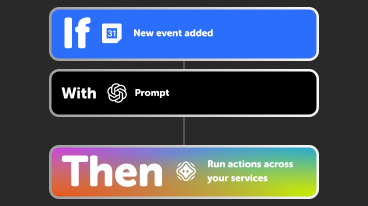
Power more advanced automations
Use credits to power your automations, including actions that require more processing. -
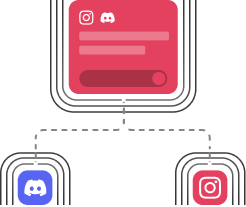
Access faster speeds and higher rate limits
Get faster updates and more actions with increased rate limits and more frequent checks.
Google Calendar and Google Sheets tips, tools, and resources


More on Google Calendar and Google Sheets
About Google Calendar
Google Calendar and IFTTT let you trigger automations when calendar events happen, and create new events automatically.
About Google Sheets
Google Sheets and IFTTT let you watch for changes in your spreadsheets and automatically add or update rows and cells based on what happens elsewhere.